St. Kitts Weather Today - Forecast, Temperature & Rainfall
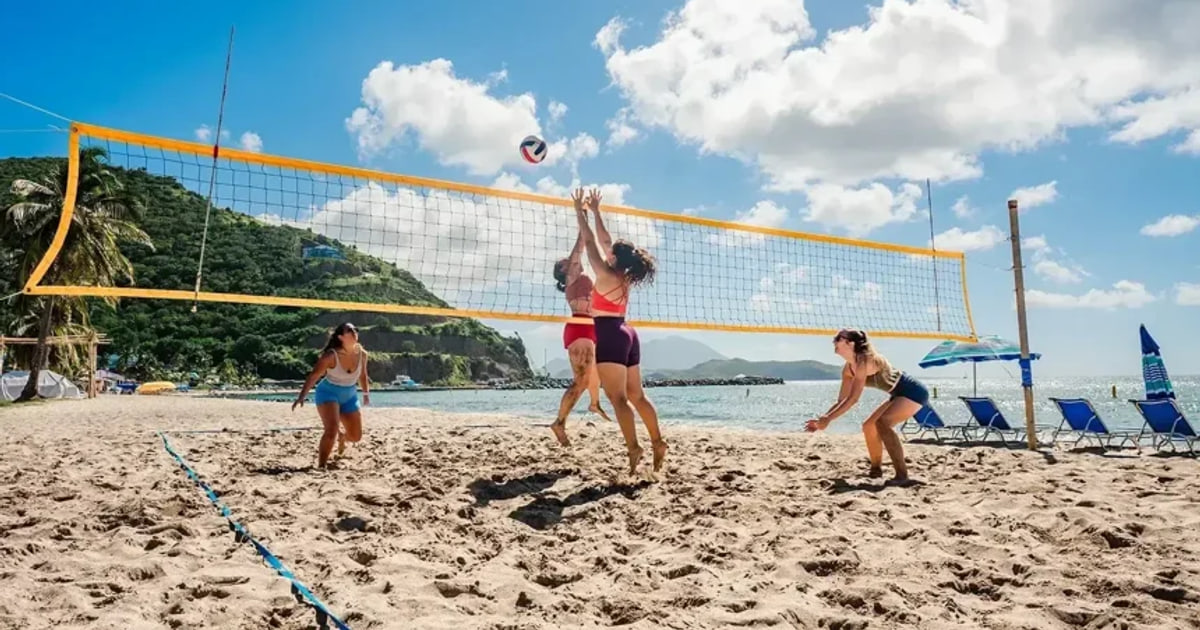
Live St. Kitts & Nevis weather: today's temperature, rainfall, wind, sea conditions and sunrise-sunset times, plus what to expect by season for your trip.
Explore St. Kitts & Nevis is the editorial travel guide to the two-island Caribbean nation, with island directories, guides and live conditions. This page needs JavaScript for its interactive maps, photography and live data - the links below work without it.
The climate in outline
St. Kitts and Nevis has a tropical maritime climate moderated by north-easterly trade winds. Daytime temperatures are stable across the year, typically in the high 20s Celsius, with nights a few degrees cooler and sea temperatures that rarely drop far below the air temperature. The practical differences between months are humidity, rainfall and sea state rather than heat. Because the islands are small and mountainous, conditions also vary by location on the same day: the Caribbean-facing west coast is usually calmer and drier than the Atlantic-facing east, and the upper slopes of Mount Liamuiga and Nevis Peak collect cloud and rain when the coast is clear.
The live readings on this page - temperature, feels-like temperature, wind, rainfall, humidity and sea conditions, alongside sunrise, sunset and tide times - describe current conditions rather than a forecast for the whole federation. Treat them as a guide for the day ahead and pair them with the seasonal picture set out in best time to visit.
Season by season
The drier season runs roughly from December to April. Trade winds are steadier, humidity is lower, showers tend to be brief, and visibility on hikes and boat trips is at its best. This period overlaps the peak travel window, National Carnival at the turn of the year and the whale-watching months, so accommodation is in highest demand. Days are shorter, with sunset arriving in the early evening.
From May the pattern shifts. Humidity rises, afternoon showers become more frequent and heavier, and sea surface temperatures climb. June brings the St. Kitts Music Festival; late July and early August bring Culturama on Nevis. Rainfall generally peaks between August and November, and this stretch also sits inside the Atlantic hurricane season, which officially runs from 1 June to 30 November with the highest activity between August and October. Direct impacts are infrequent, but passing systems can produce several days of wind, swell and rain, and travel insurance plus a flexible booking are sensible for trips in this window.
Sargassum seaweed can affect Atlantic-facing beaches, most often between spring and late summer, while west-coast bays are usually unaffected. Individual beach notes and current photography are collected in beaches and bays and compared in the beach guide.
Reading the sun, tides and sea
Because the islands sit at roughly 17 degrees north, day length varies far less than in temperate latitudes: sunrise falls between about 05:30 and 06:30 and sunset between about 17:45 and 18:45 across the year. That matters for planning. Summit hikes on Mount Liamuiga and Nevis Peak usually start at first light to stay ahead of cloud build-up and heat, while catamaran trips across The Narrows and sunset sails are timed to the evening figures shown above.
Tidal range in the eastern Caribbean is small - generally well under a metre - so tides rarely close a beach, but they do change snorkelling clarity, rock-pool access and the walkable width of narrow strands such as those on the south-east peninsula. Wind direction is often the more useful reading: a strong easterly means chop and shore break on Atlantic bays while Caribbean-side water stays flat. Operators who run reef trips, dives and sailing charters adjust routes on the day, and their listings are in activities.
Packing and planning around the weather
Lightweight, breathable clothing works year-round, with a light layer for evenings, air-conditioned interiors and boat trips. High-factor reef-safe sunscreen, a hat and sunglasses are worth prioritising given the latitude, and a compact rain shell is useful in any month for rainforest trails. Closed shoes with grip matter for volcano and ghaut hikes, where mud persists after rain even in the drier season. A full list is in the packing checklist.
Weather shapes itineraries more than it cancels them. A cloudy morning suits Brimstone Hill Fortress, the Basseterre and Charlestown heritage walks or the scenic railway; a clear, low-wind day is better spent on the water or on a summit trail. Indoor and sheltered options are listed in attractions, restaurants and shopping, and a flexible day-by-day plan can be assembled with the itinerary builder.
Cruise passengers working to a fixed window should check wind and swell before committing to a boat excursion; the cruise day plans include wet-weather alternatives. Travel notices, storm advisories and seasonal updates are published under news and advisories, other live island data sits under live, and general queries are answered in travel FAQs.